 RSS 2.0
‘Common sense is less sweeping in its demands than philosophy or mysticism have been wont to be, and can suffer the notion of this world being partly saved and partly lost. The ordinary moralistic state of mind makes the salvation of the world conditional upon the success with which each unit does its part. Partial and conditional salvation is in fact a most familiar notion when taken in the abstract, the only difficulty being to determine the details. Some men are even disinterested enough to be willing to be in the unsaved remnant as far as their persons go, if only they can be persuaded that their cause will prevail—all of us are willing, whenever our activity-excitement rises sufficiently high. I think, in fact, that a final philosophy of religion will have to consider the pluralistic hypothesis more seriously than it has hitherto been willing to consider it. For practical life at any rate, the CHANCE of salvation is enough. No fact in human nature is more characteristic than its willingness to live on a chance. The existence of the chance makes the difference, as Edmund Gurney says, between a life of which the keynote is resignation and a life of which the keynote is hope. But all these statements are unsatisfactory from their brevity, and I can only say that I hope to return to the same questions in another book.’ (William James, The Varieties of Religious Experience).
 Psychanalyse-Paris.com
Abréactions Associations : 8, rue de Florence - 75008 Paris | Tél. : 01 45 08 41 10
Psychanalyse-Paris.com
Abréactions Associations : 8, rue de Florence - 75008 Paris | Tél. : 01 45 08 41 10
The Varieties of Religious Experience
Latest update : Thursday 7 June 2007
William James, The Varieties of Religious Experience: A Study in Human Nature [1902], Random House, New York, 1929.
Most recent articles
-
William James
The Varieties of Religious Experience
Preface, Contents and Postscript
-
William James
Conclusions
The Varieties of Religious Experience (Lecture XX)
‘I believe the pragmatic way of taking religion to be the deeper way. It gives it body as well as soul, it makes it claim, as everything real must claim, some characteristic realm of fact as its very own. What the more characteristically divine facts are, apart from the actual inflow of energy in the faith-state and the prayer-state, I know not. But the over-belief on which I am ready to make my personal venture is that they exist. The whole drift of my education goes to persuade me that the world of our present consciousness is only one out of many worlds of consciousness that exist, and that those other worlds must contain experiences which have a meaning for our life also; and that although in the main their experiences and those of this world keep discrete, yet the two become continuous at certain points, and higher energies filter in. By being faithful in my poor measure to this over-belief, I seem to myself to keep more sane and true. I CAN, of course, put myself into the sectarian scientist’s attitude, and imagine vividly that the world of sensations and of scientific laws and objects may be all. But whenever I do this, I hear that inward monitor of which W. K. Clifford once wrote, whispering the word "bosh!" Humbug is humbug, even though it bear the scientific name, and the total expression of human experience, as I view it objectively, invincibly urges me beyond the narrow "scientific" bounds. Assuredly, the real world is of a different temperament—more intricately built than physical science allows.
So my objective and my subjective conscience both hold me to the over-belief which I express. Who knows whether the faithfulness of individuals here below to their own poor over-beliefs may not actually help God in turn to be more effectively faithful to his own greater tasks?’ (William James, The Varieties of Religious Experience).
-

William James
Other Characteristics
The Varieties of Religious Experience (Lecture XIX)
‘In it arise whatever mystical experiences we may have, and our automatisms, sensory or motor; our life in hypnotic and "hypnoid" conditions, if we are subjects to such conditions; our delusions, fixed ideas, and hysterical accidents, if we are hysteric subjects; our supra-normal cognitions, if such there be, and if we are telepathic subjects. It is also the fountain-head of much that feeds our religion. In persons deep in the religious life, as we have now abundantly seen—and this is my conclusion—the door into this region seems unusually wide open; at any rate, experiences making their entrance through that door have had emphatic influence in shaping religious history.
With this conclusion I turn back and close the circle which I opened in my first lecture, terminating thus the review which I then announced of inner religious phenomena as we find them in developed and articulate human individuals. I might easily, if the time allowed, multiply both my documents and my discriminations, but a broad treatment is, I believe, in itself better, and the most important characteristics of the subject lie, I think, before us already. In the next lecture, which is also the last one, we must try to draw the critical conclusions which so much material may suggest.’ (William James, The Varieties of Religious Experience).
-

William James
Philosophy
The Varieties of Religious Experience (Lecture XVIII)
‘I do not see why a critical Science of Religions of this sort might not eventually command as general a public adhesion as is commanded by a physical science. Even the personally non-religious might accept its conclusions on trust, much as blind persons now accept the facts of optics—it might appear as foolish to refuse them. Yet as the science of optics has to be fed in the first instance, and continually verified later, by facts experienced by seeing persons; so the science of religions would depend for its original material on facts of personal experience, and would have to square itself with personal experience through all its critical reconstructions. It could never get away from concrete life, or work in a conceptual vacuum. It would forever have to confess, as every science confesses, that the subtlety of nature flies beyond it, and that its formulas are but approximations. Philosophy lives in words, but truth and fact well up into our lives in ways that exceed verbal formulation. There is in the living act of perception always something that glimmers and twinkles and will not be caught, and for which reflection comes too late. No one knows this as well as the philosopher. He must fire his volley of new vocables out of his conceptual shotgun, for his profession condemns him to this industry, but he secretly knows the hollowness and irrelevancy. His formulas are like stereoscopic or kinetoscopic photographs seen outside the instrument; they lack the depth, the motion, the vitality. In the religious sphere, in particular, belief that formulas are true can never wholly take the place of personal experience.’ (William James, The Varieties of Religious Experience).
-
William James
Mysticism
The Varieties of Religious Experience (Lectures XVI and XVII)
‘In this shape, I think, we have to leave the subject. Mystical states indeed wield no authority due simply to their being mystical states. But the higher ones among them point in directions to which the religious sentiments even of non- mystical men incline. They tell of the supremacy of the ideal, of vastness, of union, of safety, and of rest. They offer us hypotheses, hypotheses which we may voluntarily ignore, but which as thinkers we cannot possibly upset. The supernaturalism and optimism to which they would persuade us may, interpreted in one way or another, be after all the truest of insights into the meaning of this life.
"Oh, the little more, and how much it is; and the little less, and what worlds away!" It may be that possibility and permission of this sort are all that are religious consciousness requires to live on. In my last lecture I shall have to try to persuade you that this is the case. Meanwhile, however, I am sure that for many of my readers this diet is too slender. If supernaturalism and inner union with the divine are true, you think, then not so much permission, as compulsion to believe, ought to be found. Philosophy has always professed to prove religious truth by coercive argument; and the construction of philosophies of this kind has always been one favorite function of the religious life, if we use this term in the large historic sense. But religious philosophy is an enormous subject, and in my next lecture I can only give that brief glance at it which my limits will allow.’ (William James, The Varieties of Religious Experience).
Articles in this section
-
William James
The Value of Saintliness
The Varieties of Religious Experience (Lectures XIV and XV)
-
William James
Saintliness
The Varieties of Religious Experience (Lectures XI, XII, and XIII)
-
William James
Conversion—Concluded
The Varieties of Religious Experience (Lecture X)
-

William James
Conversion
The Varieties of Religious Experience (Lecture IX)
-
William James
The Divided Self, and the Process of its Unification
The Varieties of Religious Experience (Lecture VIII)
-
William James
The Sick Soul
The Varieties of Religious Experience (Lecture VI and VII)
-
William James
The Religion of Health-Mindedness
The Varieties of Religious Experience (Lecture IV and V)
-

William James
The Reality of Unseen
The Varieties of Religious Experience (Lecture III)
-
William James
Circumscription of the Topic
The Varieties of Religious Experience (Lecture II)
-

William James
Religion and Neurology
The Varieties of Religious Experience (Lecture I)
Revue de presse « psy »
-
 Courrierinternational.com
Nous eussions préféré que Lacan s’exprimât plus clairement
par Anna Lietti
-
 LEXPRESS.fr
Procès Lacan, querelle de chapelles
par Jérôme Dupuis
Librairie Psy
-
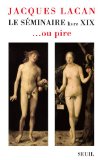 Jacques Lacan
Le Séminaire - Livre XIX (1971-1972)
-
 Jacques Lacan
D’un discours qui ne serait pas du semblant
Le Séminaire - Livre XVIII (1970-1971)
Annuaire-Psy
Derniers sites inscrits
-

Marie Preto, Psychanalyste - Argenteuil 95
http://www.psychanalyste-argenteuil95.fr
-

Jean-Marc Lustik, Psychothérapeute
http://www.psychologie-sexologie.fr
-

Catherine Gasse, Psychanalyste
http://www.psychanalyse-paris10.fr
Psychanalyste Paris | Psychanalyste Paris 10 | Psychanalyste Argenteuil 95
Annuaire Psychanalyste Paris | Psychanalystes Paris
Avocats en propriété intellectuelle | Avocats paris - Droits d'auteur, droit des marques, droit à l'image et vie privée
Avocats paris - Droit d'auteur, droit des marques et de la création d'entreprise